Choosing a Team-Building Farm Stay Near Hangzhou
The phrase covers three different products. This guide sets out five cases where Moganshan is the wrong answer, then gives selection criteria by group size, catering and quiet hours, using real data from 100 verified properties.
1. Unpack the phrase first: three different products
Searching for a team-building farm stay near Hangzhou returns three products that are priced in completely different ways. The first is the suburban farm restaurant: the belt around Jingshan, Liangzhu, Yuhang and west of the West Lake, all within an hour, sold per head - a country meal plus an afternoon of mahjong and karaoke, roughly 100 to 250 yuan a person, with no overnight stay required. It is close and effortless; its weak point is that lodging is an afterthought, and twenty people sleeping there is a mixed experience.
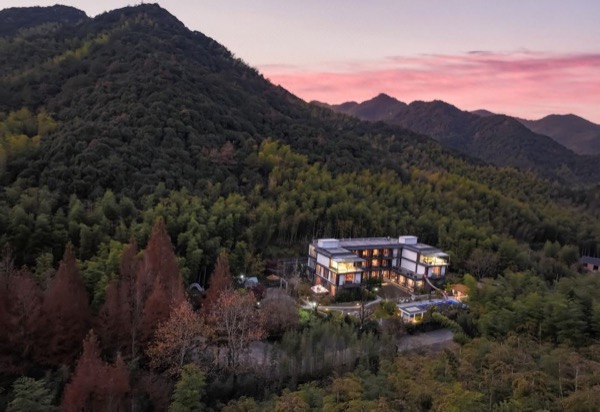
The second is the converted farmhouse inn near a scenic area, sold by the room. The building is far better than an old farm stay, but the common areas are shared, and the owner is usually unwilling to let twenty people take over the courtyard after dark. The third is the whole-house rental, sold per house per night, with the house entirely yours: of the 100 properties on this site, 95 are an entire house and 5 are an entire floor.
So the first question is not which one is better, it is whether you are buying a meal plus an activity, or a house for twenty-two hours. For the first, read the menu and the activity price list; for the second, read the quiet hours and the bedroom count. Compare them together and you will pick wrong.
2. Five cases where Moganshan is the wrong answer
Start with the cases where you should not come. This is not politeness: what Moganshan sells is a house, not an activity programme, and when the brief does not match it is both more expensive and more trouble than a farm stay in the near suburbs.
- A day trip or a half day: the median straight-line distance from Hangzhou to the 100 properties is about 45 km, roughly 60 km by road, one to one and a half hours of driving, of which the final climb into the hills always costs 30 to 40 minutes. A same-day return trades three hours of driving for five hours on the ground, and that trade does not work.
- Fewer than ten people: whole-house capacity starts at 10 with a median of 20, so ten people still pay for a house, and the per-head cost ends up above a farm stay package.
- Someone in the group cannot take a long mountain drive: the last stretch is continuous switchbacks, and for colleagues who get carsick, who are pregnant, or who have neck or back trouble, this part is far harder than the motorway.
- The budget is per head and the brief is simply a meal plus karaoke: a farm stay quote already includes food and space, whereas a house is priced as a house with catering billed on top.
- You want someone to run the programme: of the 100 properties, zero offer ropes courses or paintball, and zero offer farm-work experiences. More on this in section 4.
3. The difference is not distance, it is hours bought: 5 versus 22
Here is the time arithmetic of a one-day farm stay: leave at nine, arrive at half past ten, head back at half past four. That is five to six hours on site, and once a ninety-minute lunch comes off it, three to four hours remain for anything you would call an activity. Enough for a meal and a few rounds of cards; not enough for a proper group exercise.
Two days and one night is a different container: 99 of the 100 properties hand over rooms at 14:00 or later and 98 want you out by 12:00, so one night is a 22-hour stay. Take out sleeping and the slots you can actually programme are 14:00 to 18:00, 19:00 to 22:00, and 08:00 to 11:30 the next morning - about 10.5 hours, or roughly 8 once two meals come off. That is more than double a day trip.
What the extra night buys is not scenery. It buys not having to rush, and the three hours after dinner. The conversations that actually loosen a team up almost all happen after the evening meal, and a day trip has no such slot. Turn it around: if nothing in your programme needs the evening, the extra half day and night are not worth paying for.
4. The activities a farm stay sells, Moganshan mostly does not have
This is where people get caught out. A farm stay sells the fact that someone else has organised things: you arrive and there is a programme - fruit picking, fishing, grinding soy milk, small group games - run by the owner or a facilitator. At a whole-house rental in Moganshan almost none of that exists: across the 100 properties, zero offer farm-work experiences, zero offer ropes courses or paintball, 12 list fruit picking and 11 list fishing.
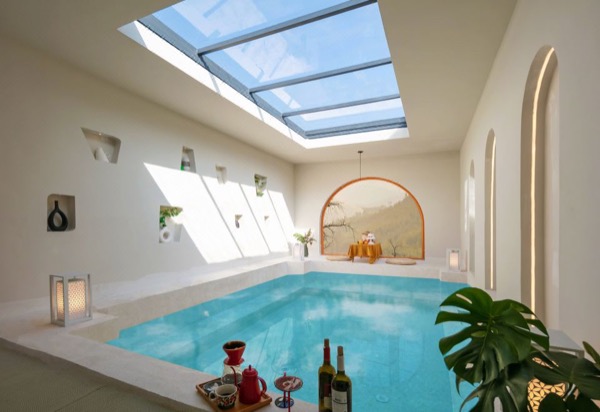
What you are buying is space and facilities: pools at 65 properties, hot springs at 24, a meeting or multi-purpose room at 87, a games room at 71, karaoke at 56, barbecue facilities at 86. Those are venues, not a programme. Nobody will call everyone into the courtyard at eight in the evening to run a game; someone in your group has to do that.
So settle one thing before you book: does anyone in your team want to be the person running the schedule? If yes, a whole-house rental gives you far more freedom than a farm stay. If no, the twenty-two hours will contain long empty stretches that end with everyone in their own room on their phone - and a good farm stay meal would have served you better.
5. The three items that rarely come together: only 46 of 100 have all three
On a farm stay brochure, a games room, karaoke and a barbecue are close to standard. In a whole-house rental they follow the house: 71 properties have a games room, 56 have karaoke, 86 have barbecue facilities - but only 46 have all three, which means the other 54 are missing at least one.
Add headcount and the number falls fast: of the 61 houses sleeping 20 or more, 32 have all three; in the 20-to-29 band, 22 of the 42 do; among the 19 houses sleeping 30 or more, only 10 do.
The reason is that selling a house and selling a programme are different businesses. A farm stay equips itself to take bookings; a holiday home was built with whatever the owner put in. So do not tick boxes against the photo gallery - decide the one item you will not compromise on and let the other two be imperfect. Otherwise you will spend the whole process comparing houses that are each missing something, and book nothing.
6. Food: 91 have a restaurant, but 40 of the 61 larger houses have no kitchen
Meals included is the default at a farm stay. It is not the default in a whole-house rental. The site has restaurants at 91 properties and barbecue facilities at 86, but only 42 have a kitchen. Narrow it to the 61 houses sleeping 20 or more and just 21 have a kitchen - the other 40 have no stove at all. Among the 19 houses sleeping 30 or more, only 4 have a kitchen.
And having a restaurant does not mean board is included. Most bill per order, twenty people at one table needs to be arranged in advance, and the per-head cost is often above a set team meal you could book in the city. So once you reach twenty, either you land on one of those 21 houses with a kitchen, or you agree the menu, the serving time and the payment up front.
- "Is the kitchen private or shared, and may we bring our own ingredients?" Thirty-six properties list a shared kitchen, and twenty people cooking at once will collide.
- "Are the stove, charcoal, grill and tableware provided, and is there enough for twenty?" Eighty-six list barbecue facilities, but consumables are not recorded anywhere on the site.
- "Can the restaurant seat twenty for a set team meal? Does it need a day of notice, and by what time must the order be in?" Ninety-one have a restaurant, and the hours vary.
- "Is there a corkage fee if we bring our own drinks? Is the fridge big enough?" Disputes over this surface at the moment of paying.
7. Noise: farm stays wind down by 22:00, and rentals have quiet hours too
Many people assume the point of taking a whole house is making noise for as long as they like. In practice, 38 of the 100 properties state no quiet hours at all, and among those that do: 25 start at 22:00, 18 at 23:00, 9 at 21:00 and 3 at midnight. "Events allowed" and "quiet hours" are two separate constraints that stack: 84 properties explicitly allow events, but only 20 of them also allow noise after 23:00 - 7 in the 20-to-29 band, and none at all sleeping 40 or more.
A farm stay is the mirror image: surrounded by villagers, it usually has to be finished by ten, but because it sells activities, daytime noise is entirely legitimate. So the difference is not whether you can be loud, it is not having to read the next table. In a whole-house rental the building is yours and there are no strangers in the corridor, which no farm stay lobby or shared games room can offer.
Ask for a range, not a single hour: "from what time to what time are the quiet hours, and when do karaoke and the sound system have to be off?" Six properties list a daytime slot as their quiet time, because a policy written as "please keep noise down between X and Y" was split into two fields - reading one number alone will mislead you.
8. Pick your size band, then make the call
Everything above collapses into a decision by headcount. Capacity across the site runs 39 properties for 10 to 19 people, 42 for 20 to 29, 7 for 30 to 39, and 12 for 40 or more. The middle band is the most comfortable and the easiest to book. The 30-to-39 band is a genuine gap - only 1 property covers 35 to 39 - so at that size either shop in the 40-person band, where 8 properties cover 40 to 44, or split into two houses.
For groups under 20, a single day, or a team with someone who cannot take the mountain road, the honest answer is a farm stay inside the one-hour belt west of Hangzhou: you save three hours of driving and spend it on the food instead. That is not turning business away - a booking whose brief does not match will not be happy once it arrives.
- "Is the whole house ours alone, or do other guests share the courtyard?" Ninety-five properties are an entire house, 5 are an entire floor.
- "How late can we use it, and from what time to what time are the quiet hours?" Ask for a range, not a single hour.
- "Are the games room and karaoke included in the rate? What time do they close, or are they metered separately?" Fifty-six have karaoke.
- "Can we cook for ourselves, and are the stove and tableware enough for twenty?" Forty-two have a kitchen.
- "Can we drop luggage before 14:00, and can we leave it somewhere after 12:00?" Ninety-nine hand over at 14:00 or later, 98 want you out by noon.
- "Is the barbecue fully equipped or is it just a space? Is there an indoor option if it rains?" Eighty-six list barbecue facilities, and from October the outdoor hours roughly halve.